
Patient Guide
Sinus Lift Surgery Care
General care guidance before and after sinus lift surgery.
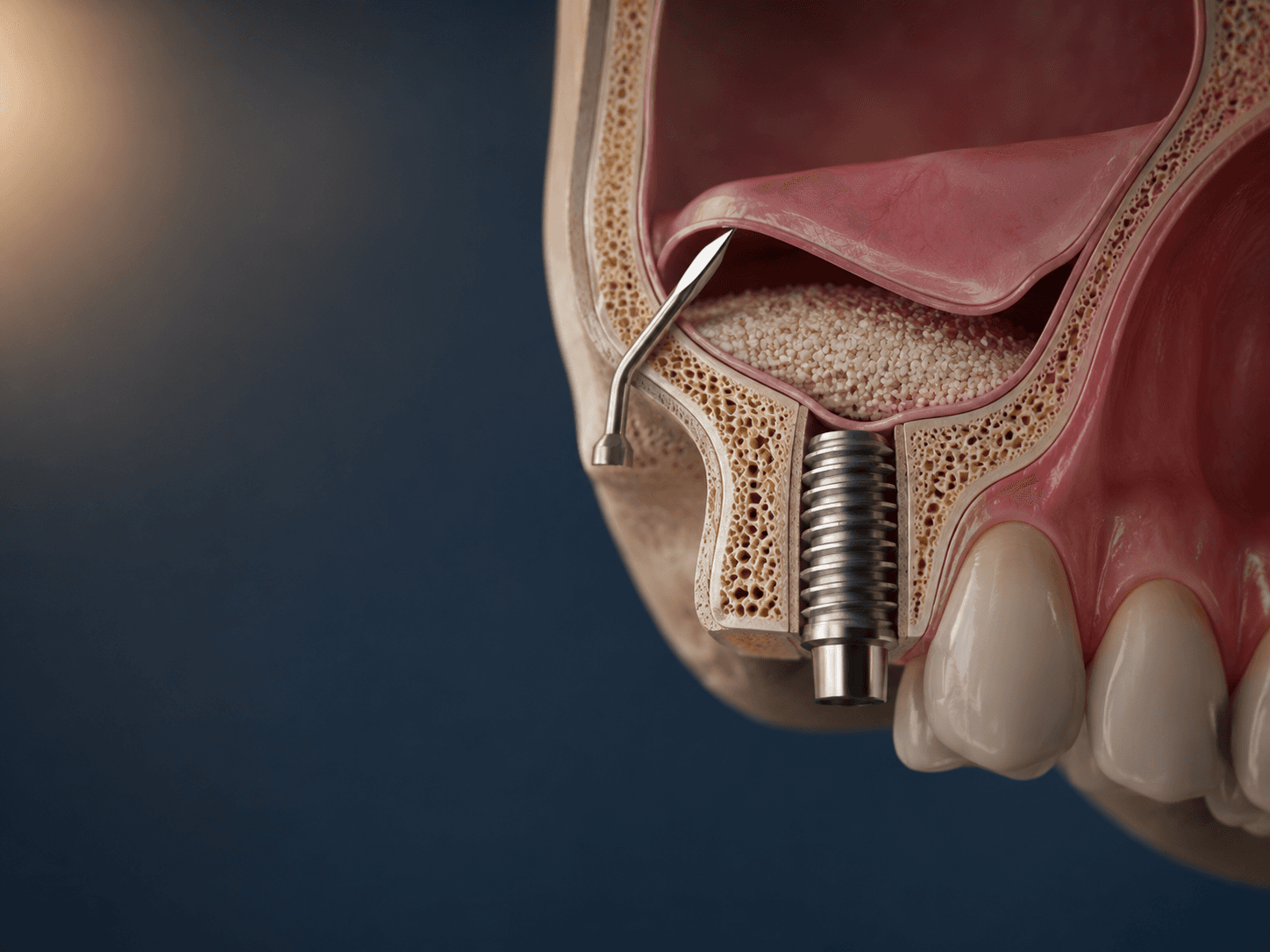
Before the Procedure
- Before surgery, sinus health and bone thickness are assessed with imaging such as a CBCT scan.
- Let your doctor know beforehand about any sinus infection, cold, nasal congestion, or frequent sneezing.
- Underlying conditions such as diabetes or high blood pressure should be well controlled.
- Blood-thinning medication should only be managed under your doctor's guidance.
- Avoid smoking for at least two weeks before surgery.
- Take prescribed medication and mouthwash only as your doctor directs.
After the Procedure
- The most important rule after a sinus lift is avoiding any pressure in the nose and sinus.
- Avoid blowing your nose for at least two weeks.
- Sneeze with your mouth open — avoid sneezing with your mouth closed.
- Don't use forceful or high-pressure nasal rinses.
- Avoid straws, suction, and forceful spitting.
- Avoid flying or pressure changes for two weeks unless your doctor approves.
- Take antibiotics and pain relief exactly as prescribed.
- If a saline spray or nasal medication is prescribed, use it only with gentle pressure and as instructed.
- A cold compress and keeping your head elevated while sleeping for the first 24 hours can help control swelling.
- Cheek swelling, slight nasal oozing, a feeling of sinus pressure, and mild bruising under the eye can be normal.
- New bone formation usually takes a few months, and the timing of the follow-up implant is set by your doctor.
When to Contact the Clinic
Contact the clinic immediately if you experience severe pain, fever, unusual bleeding, or any other concerning symptom.
- High fever
- Pus discharge
- Heavy bleeding
- Uncontrolled pain
- A strong bad taste or odor in the mouth
- Ongoing fluid or blood from the nose
- A sharp increase in swelling or pain
Frequently Asked Questions
This page is for general awareness and early post-treatment care only. It does not replace your doctor's direct instructions, an in-person examination, or follow-up care. If you notice any unusual symptoms, please contact the clinic.
← Back to Pre & Post Procedure CareHave a question about care before or after your procedure?
The Smart Clinic Assistant can suggest the right guide for your procedure or start your consultation path.